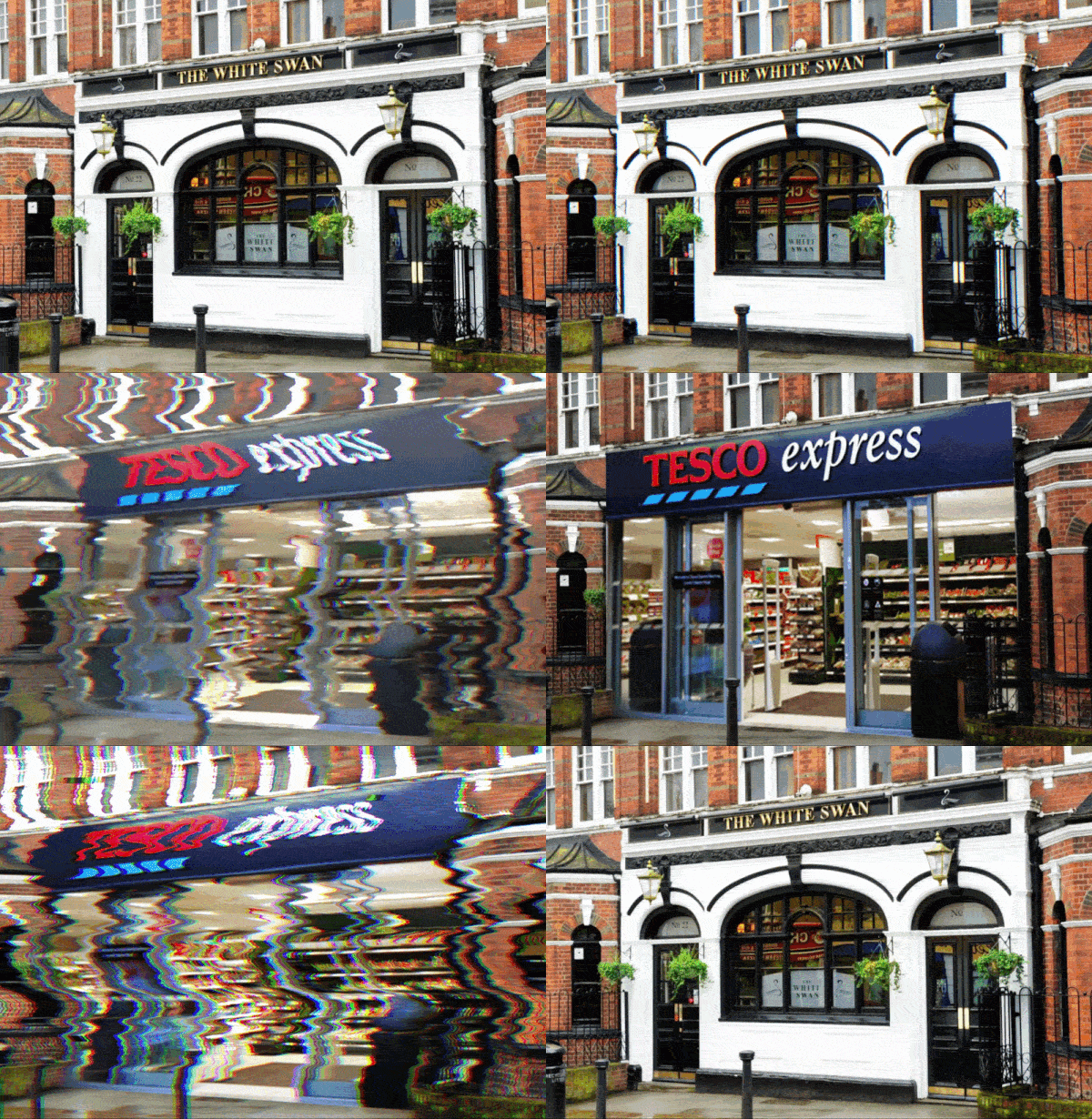
Ask Greenwich To Protect Pubs
The Royal Borough of Greenwich Local Plan is a document that will determine the future of pubs in Greenwich for the next 15 years. Right now the plan details how property developers can turn Greenwich pubs into flats and shops, but it doesn't include how we can keep our remaining pubs alive and protect these spaces for our communities.
You can help save Greenwich's pubs. Ask Royal Borough of Greenwich to reflect on its pub policy in its plan.
Ask Royal Borough of Greenwich to plan for community ownership not private developers.
-
To treat all remaining Greenwich pubs as community assets
-
To recognise small pubs as key drivers of the economy in local and neighbourhood centres
-
And ensure that the local plan contains a strong presumption of retention of our remaining pubs in replacement of the presumption of redevelopment and destruction.
Act today email local-plan-consultation@royalgreenwich.gov.uk
We have drafted a full response here that you can copy and paste or adapt:
White Swan Music and Arts Royal Borough of Greenwich Regulation 19 consultation response
We urge the council to adopt the most appropriate strategy in the local plan to retain the remaining local pubs in Greenwich. This includes a strong presumption in favour of retaining and restoring community spaces, like pubs, consistent with the national policy and legislative agenda outlined in the English Devolution and Community Empowerment Act.
And to ensure proactive compliance with NPPF Para 98
“‘plan positively for the provision and use of shared spaces, community facilities (such as local shops, meeting places, sports venues, open space, cultural buildings, public houses and places of worship) and other local services to enhance the sustainability of communities and residential environments; o take into account and support the delivery of local strategies to improve health, social and cultural well-being for all sections of the community; to guard against the unnecessary loss of valued facilities and services, particularly where this would reduce the community’s ability to meet its day-to-day needs;“
As it stands the Greenwich Local Plan fails to plan positively on pubs and is failing to meet the provisions of the National Planning Framework.
Pubs in the Royal Borough of Greenwich are vital community spaces that support local social and cultural life, provide employment, and help prevent neighbourhood decline. We ask that Greenwich recognises their unique position as drivers of neighbourhood economies.
The continued closure of local pubs means the loss of places where people meet friends, build relationships, and maintain a sense of belonging. This is not simply a commercial issue but a social one, affecting wellbeing, cohesion, and the long-term health of our neighbourhoods.
We urge the council
-
To treat all remaining Greenwich pubs as community assets
-
To recognise small pubs as key drivers of the economy in local and neighbourhood centres
-
And ensure that the local plan contains a strong presumption of retention of our remaining pubs in replacement of the presumption of redevelopment and destruction.
Background
Over the last 25 years Greenwich has lost 39% of its pubs and since 2020 we are losing what remains at an increasingly alarming rate (GLA Pub Audit 2024). In London, most at risk are smaller local and neighbourhood pubs, amid the trend for larger pubs and chains in Town Centres which are afforded protection in the planning system from commercial residential redevelopment. This trend toward larger pubs can be seen by the median workforce rate of the remaining pub workforce in Greenwich evidenced in the GLA Pub Audit 2024 report.
Financial Viability Test
The Local Plan asks owners of pubs to undertake a financial viability test prior to granting permission to redevelop a pub:
“Development proposals involving the loss, change of use, or demolition of a public house with heritage, cultural or social value will be resisted unless it can be demonstrated that: a. the public house no longer serves a community function, evidenced by a community needs assessment and engagement with local stakeholders; and b. the public house is no longer economically viable, supported by a detailed viability assessment and evidence of active marketing at a realistic market rate.”
This planning assumption is outdated, fundamentally flawed and economically unsound, failing to reflect the reality of the economy or the social value of a pub. The financial viability test fails to recognise the economic success of pubs that are run not for profit or are community owned.
The Local Plan currently assumes that pub financial viability is only measured by commercial owners at a market rate, with a surplus extracted by shareholders, a community ownership financial viability model is a vital component of any change of use of community assets. Any financial viability test for a pub that does not proactively include community ownership is based on unsound evidence.
The Plunkett Society reports Community-owned pubs achieve an exceptional 99% five-year survival rate and a long-term survival rate of 92% to 94%, massively outperforming traditional small and medium-sized hospitality enterprises.
Recommendation: We ask that, before any redevelopment in whole or in part, all pubs be subject to a period of engagement and consultation with the local community to explore non profit financial viability and community transfer.
Economic Impact
The Local Plan should also explicitly recognise the importance of community-owned pubs and ancillary facilities, which create local jobs, keep wealth within local centres and neighbourhoods, and that they play a proven role in sustaining high streets and residential areas in secondary trade and job creation.
Punch Pubs in partnership with Northumbria University (April 26) has found that the average UK pub contributes up to £1.3m in economic and social value to its local community.
There needs to be recognition that pubs in their entirety, including ancillary use, have a huge economic impact on local neighbourhood centres, driving footfall to other businesses, failure to plan for pub retention in local centres and neighbourhoods is unsound and failing to meet economic development needs.
Recommendation: Before any development or redevelopment in whole or part, a local neighbourhood economic assessment should be undertaken.
Ancillary Use
We ask for a strong statement of support in recognition that a pub is not just the bar area and seating ,with a ban on alterations leading to a loss of cellarage, other functional or ancillary space or changes to a pub that make it unviable or remove communal social space, like function rooms, beer gardens, or functional space such as managers’ flats and access for roadside deliveries.
This reinforces that in planning, pubs are not only treated as financial entities but as community entities and are seen in the local plan as a whole entity not individual parts - it ensures RBG meets its current national duty to treat pubs as community spaces and any future duty to do so. This prevents the death by a thousand cuts to community pubs, with recognition that beer gardens and function rooms are a vital part of any pub's financial viability and social value. Ancillary spaces like the beer garden, kitchens and function rooms, where events are held and local people gather, are the reality of today - pubs that are dependent on more than a wet-led financial model solely dependent on drink sales, with a business model based on a diversification of trading income, for example Sunday lunch, community hire or live music events.
In White Swan Music and Arts’ own research in March 2023, 23% of respondents (217 people) said they used to use the White Swan as part of a group, community or organisation. This included arts organisations which no longer have a space to meet or suitably-sized space to rehearse or put on events - community events like the Woolwich and Charlton Film Festival, the band rehearsal space or the Roving Folk Club.
The well-worn pathway of neighbourhood pubs becoming financially unviable by partial development is born out in national research. According to Search Acumen's 2025 Commercial to Residential Property Trends Report, based on Glenigan planning data, former pubs accounted for the highest number of approved or conditionally approved commercial-to-residential applications, with 276 identified since 2021. The report also found that residential conversions of pubs increased by 20.9% between 2021 and 2025.
Recommendation: As any change of any part of any pub is the planning pathway to closure. The local plan and planners should recognise this fact in the local plan and strengthen protection for the entirety of a public house.
Further consultation and coproduction
Bringing commercial and public assets into community ownership is becoming a more established pathway to economic prosperity, sustainability and development, which is under-recognised.
Recommendation: We ask for further supplementary detailed guidance which recognises the social, cultural, and economic value of pubs and leisure spaces to local communities and the importance of community ownership of community buildings and spaces.
Anti fraud corruption and money laundering
The National Policy Framework is clear in the duty to design out crime, which this current draft fails to address. Taking the document as a whole we would like to see RBG take a zero tolerance approach to criminal activity and fraud in the planning process and its eco system.
This follows concerns raised by the National Police Chiefs Council Aug 25 on the use of commercial properties by organised criminal gangs as cannabis grow farms, and National Risk Assessment for money laundering and terrorist financing in July 2025, which included an assessment of risks for property developers.
Recommendation: We ask RBG to be bold and proactive in recognition that the need to combat illegal activities is the duty of all in relation to commercial property ownership. This innovative approach would strengthen enforcement and development, working with the police to stamp out illegal occupation, use of derelict properties by criminal gangs, financial signs of international money laundering like property flipping and reporting to professional bodies those that act on owners behalf that fall below their accrediting organisations professional standards.
Recommendation: Zero tolerance of fraud and crime - with a proactive duty on the whole of the council to act and report suspected signs of illegal activities.
Please act to ensure that this plan is effective and deliverable to protect local economies and our communities and recognise the need to save the few pubs we have left. We ask that these issues be properly addressed before the local plan is finalised.